Video game movies have spent decades trying to escape their reputation as unreliable adaptations, but Hollywood’s latest run of projects suggests the industry’s interest in games is far from slowing down.
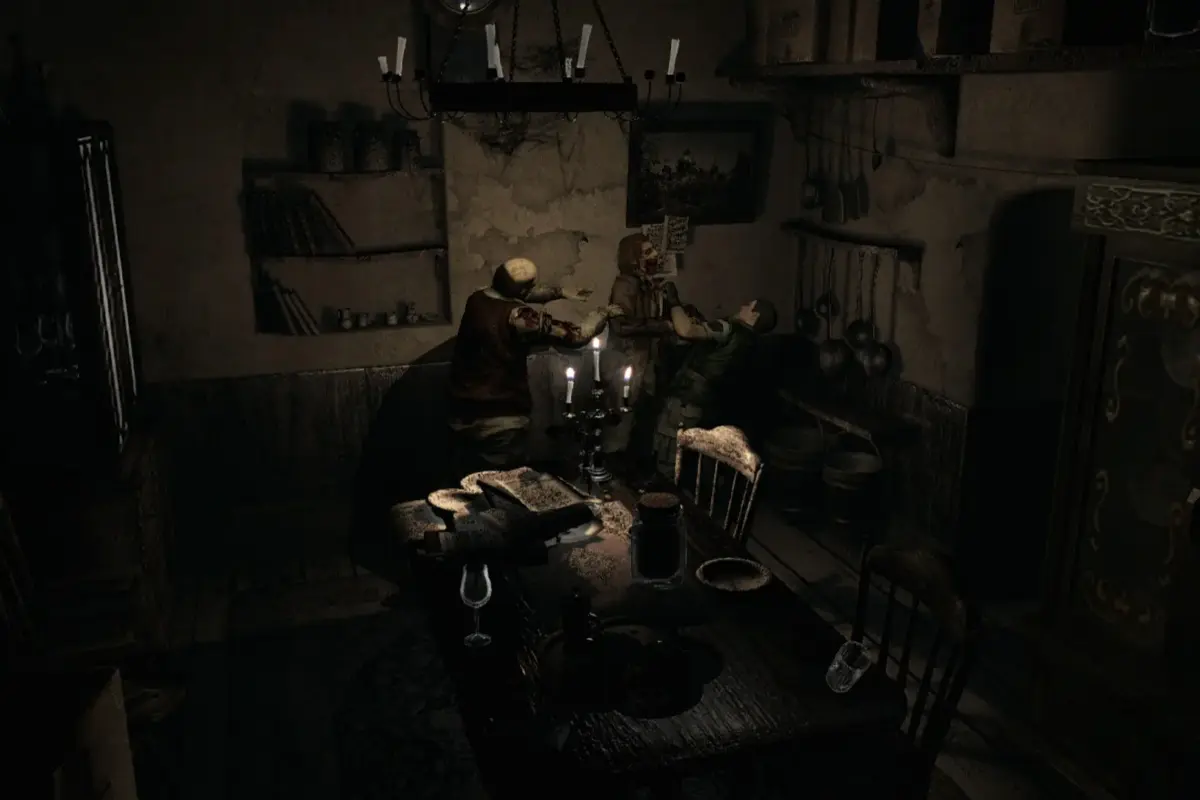
Sony’s new Resident Evil has provided the latest evidence. Zach Cregger’s reboot opened to $60 million domestically during its first weekend, more than doubling the franchise’s previous opening record, and reached $108.3 million worldwide. It’s the biggest domestic debut in Resident Evil’s 24-year movie history.
The result comes as Hollywood looks beyond established AAA franchises. Markiplier’s Iron Lung has already demonstrated that an adaptation of a small indie horror game can become a theatrical release, while 99 Nights in the Forest is heading to the big screen after becoming one of Roblox’s most popular games.
Resident Evil Has Its Biggest Movie Opening Yet
Resident Evil’s $60 million domestic opening is a significant jump over the previous franchise record. The 2002 original, directed by Paul W.S. Anderson, finished with $102.9 million worldwide, meaning the new movie surpassed its entire global theatrical run during its opening weekend. Welcome to Raccoon City, released in 2021, finished with just $41.9 million worldwide.
There’s still a bigger franchise benchmark ahead. Resident Evil: The Final Chapter earned $312 million worldwide in 2016, while Afterlife remains the previous series record-holder with around $300 million globally.
The new Resident Evil’s reception could help it continue its momentum. It currently holds a 96% Rotten Tomatoes score and a B+ CinemaScore, while Variety attributed the stronger-than-expected opening to positive reviews, word-of-mouth, and interest in Cregger following the positive critical (and public) receptions to his previous movies, Barbarian and Weapons.
From Super Mario Bros. to Mortal Kombat
The current wave of game adaptations looks very different from the first major Hollywood attempts. The 1993 Super Mario Bros. movie opened to just $8.5 million domestically and eventually grossed $20.9 million in the U.S. and Canada against a reported $42 million production budget.
Two years later, Mortal Kombat (also directed by Anderson, who has a sideline in knocking out mid-budget game adaptations) provided a considerably stronger result. The 1995 adaptation opened to $23.3 million domestically and finished with $70.4 million in North America and $122.1 million worldwide from a $20 million budget.
Those movies illustrate that video game adaptations weren’t inherently unsuccessful, but the industry’s approach was considerably less predictable. The transformation is even clearer with the 2023 Super Mario Bros. Movie. It opened to $146.4 million domestically and ultimately made more than $1.35 billion worldwide, demonstrating the scale a game adaptation can reach when the source material, filmmaking approach, and audience expectations align.
Iron Lung Proved Indie Games Can Work Too
One of the more interesting examples came earlier this year with Iron Lung, an adaptation of David Szymanski’s 2022 indie horror game. Markiplier, real name Mark Fischbach, self-financed and distributed the movie. The film expanded to more than 3,000 theaters and ultimately grossed approximately $51.2 million worldwide against a reported $3 million production budget.
That creates a different model for Hollywood. Rather than waiting for a game to become a decades-old household name, studios can identify projects with highly engaged communities and recognizable concepts, then scale them into theatrical productions.
99 Nights in the Forest Takes Roblox to Hollywood
The next major example comes from Roblox. 20th Century Studios is developing a movie based on 99 Nights in the Forest, with Josh Cooley (Toy Story 4) writing the screenplay, and Sam Raimi and Rob Tapert producing.
The project shows how far the definition of a video game adaptation has expanded. Hollywood isn’t just looking at console franchises and traditional PC games anymore; it’s also looking at experiences based on user-generated content within established game platforms.
99 Nights in the Forest is a survival horror game in which players attempt to survive, you guessed it, 99 nights in a spooky forest while searching for missing children and dealing with hostile creatures. Its popularity on Roblox (it previously peaked at 14.2 million concurrent players) gives the movie a pre-existing audience before filming has even begun.
The Last Word
Resident Evil’s $60 million opening is in stark contrast to 1993’s Super Mario Bros. and 1995’s Mortal Kombat receptions, showing how far the market has evolved, while Iron Lung demonstrates that even small indie games can become theatrical properties. Meanwhile, 99 Nights in the Forest shows studios looking to Roblox for established audiences and new intellectual property.
That range is increasingly important: games offer recognizable worlds, built-in communities, and audiences that already move between gaming, streaming and other forms of entertainment. From established franchises such as Resident Evil to indie horror and user-generated games, Hollywood now has a much larger pool of properties to adapt, giving the current video game movie boom a considerably broader foundation than ever before.
Other Gaming Content
- Why Clash Royale Refuses to Nerf Hog Rider Despite Player Requests?
- Wanderburg Achievements Guide
- SEGA and Netflix Announce Crazy Taxi and Stranger Than Heaven Movies, Plus New Sonic Series
Featured Image Credit
Image via Steam