A solo developer with virtually no previous game development experience has turned his first Steam release into a million-dollar success, selling more than 200,000 copies of AI-assisted roguelite Slotbound in just six days. Developer Min Kim, operating under the name Optima Arch, claims to have generated $1.33 million in gross revenue during the game’s first week, having used AI coding tools to build almost the entire project.
The achievement has attracted considerable attention on social media, where users have debated whether Slotbound represents a breakthrough for AI-assisted development or simply an exceptionally successful example of so-called vibe coding. Its reception is particularly interesting given the ongoing controversy surrounding generative AI in the games industry, with some developers and artists continuing to oppose its use while others argue that it could dramatically lower the barrier to entry.
Slotbound Becomes a Million-Dollar Success for a First-Time Developer
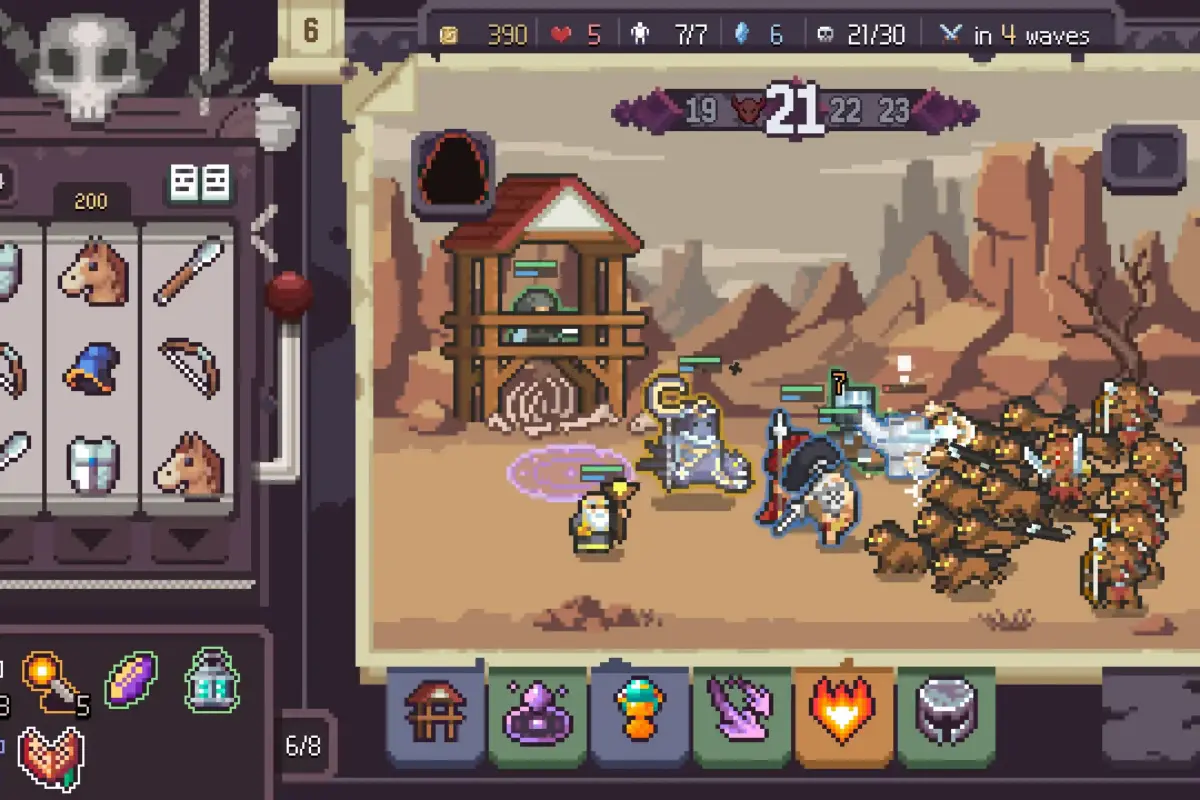
Slotbound is a roguelite defense game combining slot machine mechanics, autobattler combat and strategic unit management. Players spin a 3×3 slot to summon units, build an army and defend against increasingly difficult waves of enemies.
Matching symbols generates different units, which can subsequently be absorbed or upgraded to create stronger fighters. Items, Cores, random stats and unit Imprints introduce additional layers of strategy, allowing players to manipulate the odds and develop increasingly powerful combinations.
The concept was partly inspired by CloverPit, but Kim wanted to take its gambling mechanics in a different direction. Rather than simply using slot machines to determine combat bonuses, he imagined each matching combination summoning an actual unit to fight on the player’s behalf.
Kim began developing Slotbound on October 17, 2025, and released a free Steam demo approximately eight months later. It eventually reached second place among Steam’s most-played demos, while the full game accumulated more than 100,000 wishlists before launch.
Its commercial performance far exceeded his expectations. According to figures shared by the developer and reported by Inven Global, Slotbound passed 100,000 sales within three days and 200,000 within six days. Its first-week gross revenue reached $1,332,409, although this figure shouldn’t be confused with Kim’s personal earnings or profit after platform fees and other costs.
The achievement is particularly remarkable because Kim worked alone, self-published the game, and received no external investment or publisher funding. He reportedly relied on savings from his military service, even selling furniture and clothing to help finance development.
The success also arrives as larger companies increasingly embrace AI-assisted workflows, not least Epic Games’ AI pivot and the growing debate around vibe coding, as the technology is rapidly changing how developers approach everything from prototyping to full production.
How AI Helped Build Slotbound and What It Means for Indie Development
Given how gamers in general tend to turn their noses up at AI games, Kim has been unusually transparent about the extent of AI’s involvement. In the interview with Inven Global, he revealed that virtually all of Slotbound’s code was written using AI, despite having no traditional game development background.
He started with Microsoft’s Copilot before moving to OpenAI’s Codex, eventually alternating between two accounts to work around subscription usage limits. The game was developed using the LÖVE2D engine and Lua, with Kim describing features and mechanics in natural language before testing the resulting implementations himself.
However, this wasn’t simply a case of entering one prompt and receiving a finished game. Kim spent considerable time debugging, testing, balancing and rebuilding systems when AI-generated changes broke existing functionality. He even developed automated tests to check the entire game following modifications, alongside a tool that captured screenshots for pixel-by-pixel inspection.
AI also contributed to parts of the visual and audio production. The game’s Steam disclosure confirms that generative AI assisted with certain visual assets and promotional materials, while Kim explained that it was used for menu backgrounds, animations, shop screens, stage backgrounds and visual effects. Unit icons and character assets largely came from pre-made packs, with additional manual adjustments. He also used ElevenLabs for sound effects, while a Reddit user volunteered to compose most of the music.
This distinction is important amid the continuing argument over what constitutes acceptable AI use. House House, for example, faced backlash over its disclosure of limited AI assistance in Big Walk, despite estimating that well under 0.1% of its code was connected to chatbot assistance. Slotbound represents a substantially more extensive application, with AI responsible for virtually all its programming.
There are also questions about where AI-assisted development could lead when applied to existing intellectual property. The controversy surrounding the AI-generated Fallout: New York project and its eventual removal following a legal notice demonstrated how quickly these tools can move beyond original projects and into legally contentious territory.
The reaction to Slotbound’s success has been divided even among AI enthusiasts. Some users questioned whether an eight-month development process should be described as vibe coding, while others argued that the developer’s extensive testing, design decisions and willingness to refine the output demonstrate that AI doesn’t eliminate the need for creative direction.
The developer has also continued working on the game following its unexpectedly successful launch, releasing more than 10 updates during its first 10 days to address crashes, compatibility problems, performance issues and player feedback.
The Last Word on Slotbound
Slotbound is an interesting example of what AI-assisted development can achieve, but its success shouldn’t be mistaken for proof that anyone can effortlessly make a million-dollar game with a chatbot. Kim spent approximately a year developing, testing and refining an original concept, and his understanding of what makes the game enjoyable remained central throughout.
Nevertheless, the technology has clearly lowered the technical barrier that previously prevented people without programming experience from pursuing their ideas. Whether that will become a more common route into independent development is unclear, but Slotbound has certainly provided a very good case study.
Featured Image Credit
Image via Steam